Letters on Loan: The Typeface Licensing Audit Every UK Brand Should Run
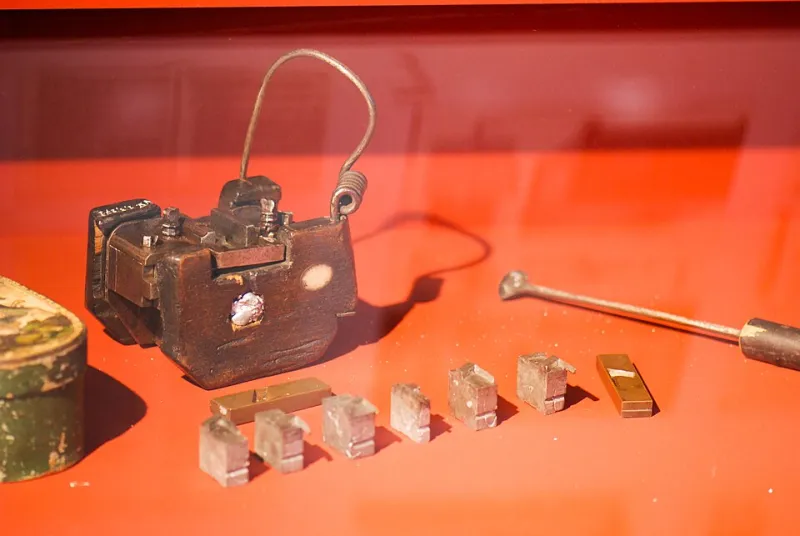
Photo: Thomas Quine, CC BY 2.0, via Wikimedia Commons
Most brand conversations about type begin with how a typeface looks and end with whether it is free. The licence sits in between, unread. That is understandable: font files arrive in a folder, get installed, and quietly become part of how a business speaks. The difficulty is that a typeface is not a picture of letters. It is software, and software is licensed rather than owned.
Within the UK, font files are protected as computer programs under the Copyright, Designs and Patents Act 1988, separately from any protection attaching to the typeface design itself. A licence therefore governs what you may do with the file, and a permissive-sounding name in a font menu says nothing about the terms attached to it.
“Free” describes a price, not a permission
The phrase “free font” covers at least four different arrangements: open-source licences such as the SIL Open Font License; free tiers offered by commercial foundries as a sampling device; genuine freeware distributed without conditions; and files circulating online with no traceable origin at all. The first is usually dependable, the third is rare, and the fourth is where problems accumulate.
The SIL Open Font License, for instance, permits commercial use, modification and redistribution, but requires that modified versions do not use the reserved font name. Google Fonts distributes largely under this and similar licences, which is why it remains a reasonable default. Even so, individual families carry their own terms, and some designers upload work under licences they were never entitled to grant.
At the other end of the spectrum, files labelled “free for personal use” appear in student projects and template bundles, and occasionally in a live brand. Personal use commonly excludes commercial application, and a logo built on such a file sits on borrowed ground.
Four licence scopes that catch UK brands out
Licences are rarely sold as a single permission. They are scoped, and a scope purchased for one channel does not extend to another.
Desktop licences cover installation on a stated number of machines for design and document work. They typically do not authorise web embedding.
Web licences are measured. Some are sold by monthly page views, others by domain, others again by the number of styles served. A campaign that pushes a site past a page-view threshold can take it outside its licence without anyone noticing.
Application and server licences cover fonts embedded in software, PDFs generated at scale, or documents produced by a system rather than a person. On-demand print, personalised PDFs and e-publications often fall here rather than in the desktop scope.
And then there is the long tail: signage, vehicle livery, packaging, embroidery, broadcast idents and social templates distributed to staff. Foundries handle these differently, and some exclude them from standard licences altogether.
Where the gap becomes visible
Licensing problems are rarely discovered during the design process. They surface at the points where a business is examined closely: due diligence ahead of investment or acquisition, a tender submission requiring asset provenance, an insurance claim, or a brand handover when a studio is asked to document what the client actually owns.
The commercial exposure is seldom a dramatic lawsuit. More often it is a quiet cost — an urgent relicensing fee, a reprint of printed matter, a website rebuilt under time pressure, or a rebrand pulled forward by two years because the original files cannot be traced.
There is a reputational dimension too. A design-led business that cannot say where its type came from is telling an unflattering story about its own processes.
Auditing what you already have
An audit need not be elaborate, but it should be written down.
Inventory. List every typeface in use across logo files, stationery, website, email templates, packaging, signage, social assets and documents. Include the ones nobody remembers choosing.
Establish provenance. For each, record the foundry or distributor, the licence type, the date of purchase or download, and where the receipt lives. If the trail ends at a former colleague's laptop, treat that as an open question rather than a closed one.
Map usage to scope. Compare where each face is deployed against the permissions held. Pay particular attention to web page-view tiers, seat counts, and any use in merchandise, signage or broadcast.
Check derived assets. Outlining a logo to curves is ordinarily fine. Embedding a font file in a PDF, an app or an e-publication is a different matter, and agency-supplied artwork sometimes contains embedded fonts nobody intended to distribute.
Record substitutions. Where a licence cannot be verified, decide whether to buy, replace or accept the risk knowingly — and note the decision and its date.
Choosing type that can travel
For new work, the useful question is not whether a typeface is free but whether its licence will still fit in three years. A few principles help.
Favour licences whose scope matches the business's actual footprint. A retailer with packaging, vans and a high-traffic site needs broader permissions than a consultancy with a brochure and a modest website.
Prefer foundries with clear terms and responsive support. A licence is far easier to extend than to replace, and a working relationship with a foundry is worth more than a marginally cheaper download.
Consider variable fonts, which can reduce the number of files and styles under licence and simplify later extension into new channels.
Weigh ubiquity against distinctiveness. The most widely used open-source families are safe and flexible, but they are also everywhere. A single licensed display face, used sparingly, often does more for recognition than three free ones used throughout.
Finally, keep the paperwork with the brand. Licences stored in a studio's archive rather than the client's are a recurring source of difficulty at handover, particularly when a marketing team changes.
A matter of housekeeping
None of this requires legal expertise so much as attention. A simple register — typeface, source, licence, scope, renewal date — is sufficient for most UK SMEs, reviewed whenever the brand changes hands or expands into a new channel. Where exposure looks significant, a solicitor specialising in intellectual property should be consulted; the notes above reflect design practice rather than legal advice.
It is unglamorous work. It also protects the part of the brand that is easiest to overlook: the letters themselves.